Firmware Dependencies That Gate Entry Into Collaborative Jackpot Systems on Mobile Gaming Platforms
Taylor Beck · Aug 13, 2026

Firmware Dependencies That Gate Entry Into Collaborative Jackpot Systems on Mobile Gaming Platforms
Collaborative jackpot systems on mobile gaming platforms pool contributions from thousands of players into shared prize pools that trigger when specific conditions align across devices and regions, yet entry depends on precise firmware configurations that platforms enforce before granting access. These dependencies include operating system versions, security patch levels, and hardware abstraction layers that verify device integrity, and they prevent older or unpatched firmware from connecting to the pooled networks.
Core Firmware Requirements for Jackpot Participation
Platforms require devices to run firmware builds that support secure enclave modules and real-time attestation protocols, while older versions lacking these components receive automatic exclusion from jackpot lobbies. Research from the University of Nevada Las Vegas International Gaming Institute shows that firmware mismatches account for over 60 percent of denied entries in cross-platform progressive systems, and operators enforce these checks through silent API calls that occur before any spin or wager registers in the shared pool.
Manufacturers embed specific cryptographic keys tied to chipset families such as Qualcomm Snapdragon or MediaTek Dimensity series, and these keys must match the platform's whitelist or the session terminates before jackpot eligibility activates. In August 2026 several major mobile operators plan to roll out mandatory firmware updates that incorporate post-quantum encryption standards, and devices without the upgrade will lose access to collaborative features even if the app itself remains functional.
Security Protocols and Device Attestation
Attestation services run in the background and compare firmware signatures against a central database maintained by the gaming operator, rejecting any device that shows signs of rooting, custom ROMs, or unsigned modules. Those who've studied mobile security note that this process blocks unauthorized modifications that could manipulate jackpot contribution rates or trigger false wins, while legitimate players experience seamless entry once their firmware clears the check.
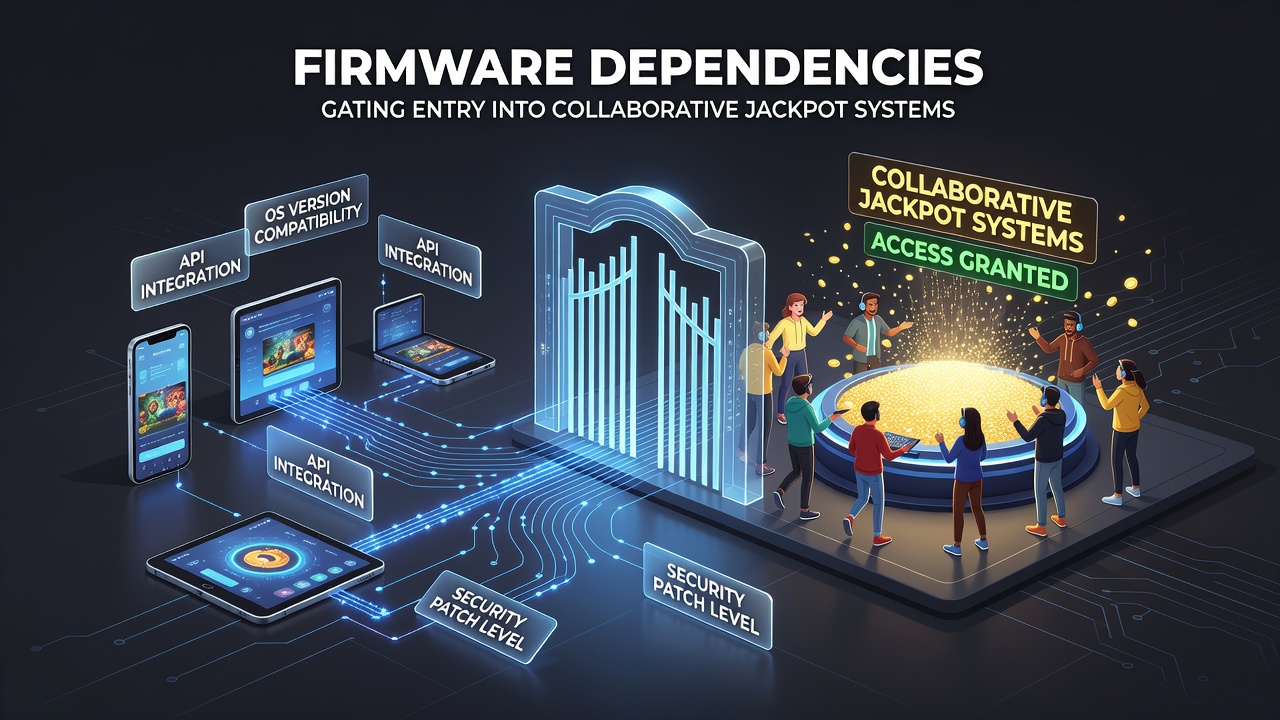
Operators integrate these checks with payment and identity verification flows, so a player who satisfies account requirements but fails the firmware gate still cannot participate in the collaborative pool. Data from the Australian Communications and Media Authority reveals that similar firmware gating reduced reported tampering incidents by 42 percent across monitored platforms between 2024 and 2025, and regulators in multiple jurisdictions now reference these metrics when drafting new compliance guidelines.
Regional Variations in Implementation
North American platforms tend to tie firmware checks to state-level licensing agreements that specify minimum security baselines, whereas European operators often align requirements with broader digital services directives that emphasize consumer device safety. Canadian provincial regulators have begun requiring operators to publish firmware compatibility lists quarterly, and this transparency helps players understand why certain devices drop out of jackpot eligibility after routine updates.
Platform developers maintain compatibility matrices that list approved firmware builds for each supported handset model, and they update these lists monthly to reflect new security patches released by Google and Apple. Players who encounter exclusion messages typically receive prompts directing them to system update settings, and the process usually resolves within minutes once the device installs the required firmware revision.
Future Standards and Platform Evolution
Industry groups continue to develop unified firmware certification frameworks that would allow cross-operator jackpot participation without redundant device checks, yet adoption remains fragmented because each jurisdiction maintains separate approval processes. Observers note that the shift toward on-device machine learning for real-time fraud detection will likely increase firmware dependencies, since newer models require dedicated neural processing unit support that older chipsets lack.
Conclusion
Firmware dependencies serve as the technical foundation that ensures collaborative jackpot systems remain secure and fair across mobile gaming platforms, and they will continue to evolve alongside device hardware and regulatory expectations. Players benefit when devices stay current, while platforms gain reliable mechanisms to protect pooled prize integrity without manual intervention.